Yosemite is open every day of the year, but it's a completely different park in January than in July. The Valley trail that's glazed with ice in winter can be a hot, crowded slog by August. And the high country, the granite domes and alpine lakes along the Tioga Road, is cut off by snow for roughly half the year.
So the honest answer to "when should I go?" is: it depends on what you want to do. Below you can flip through the seasons, see the weather month by month, check which roads close in winter (and when they usually reopen), and match each season to the right kind of trip.

Spring
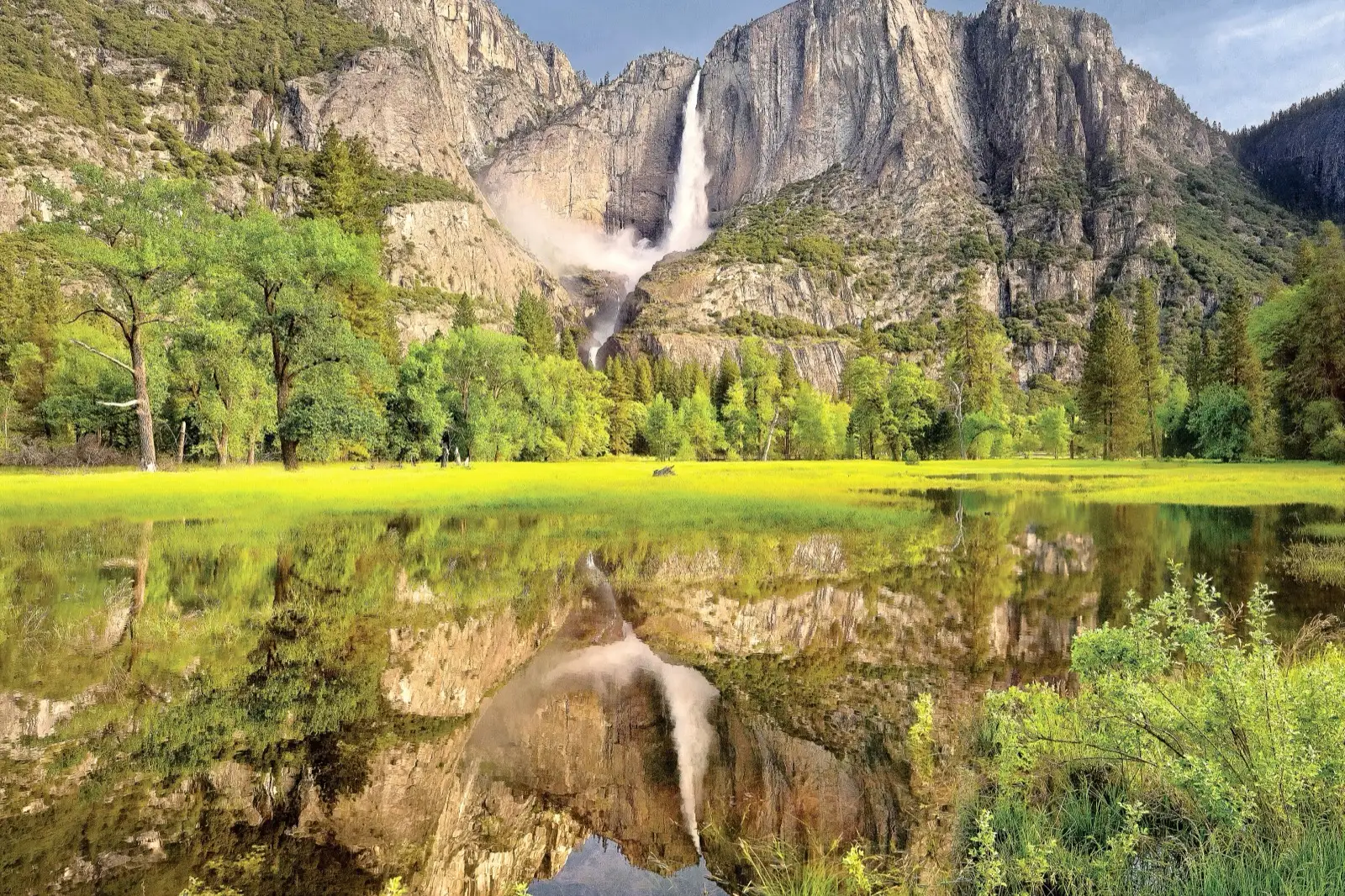
The loudest time of year: snowmelt swells every waterfall, and the Valley's dogwoods bloom in May.
- Valley highs
- 17–21 °C (63–71 °F)
- Rain and snow
- 81 mm in April, 49 mm in May
- High roads
- Usually still closed in April and much of May
- Best for
- Peak waterfalls, mid-to-late May

Summer
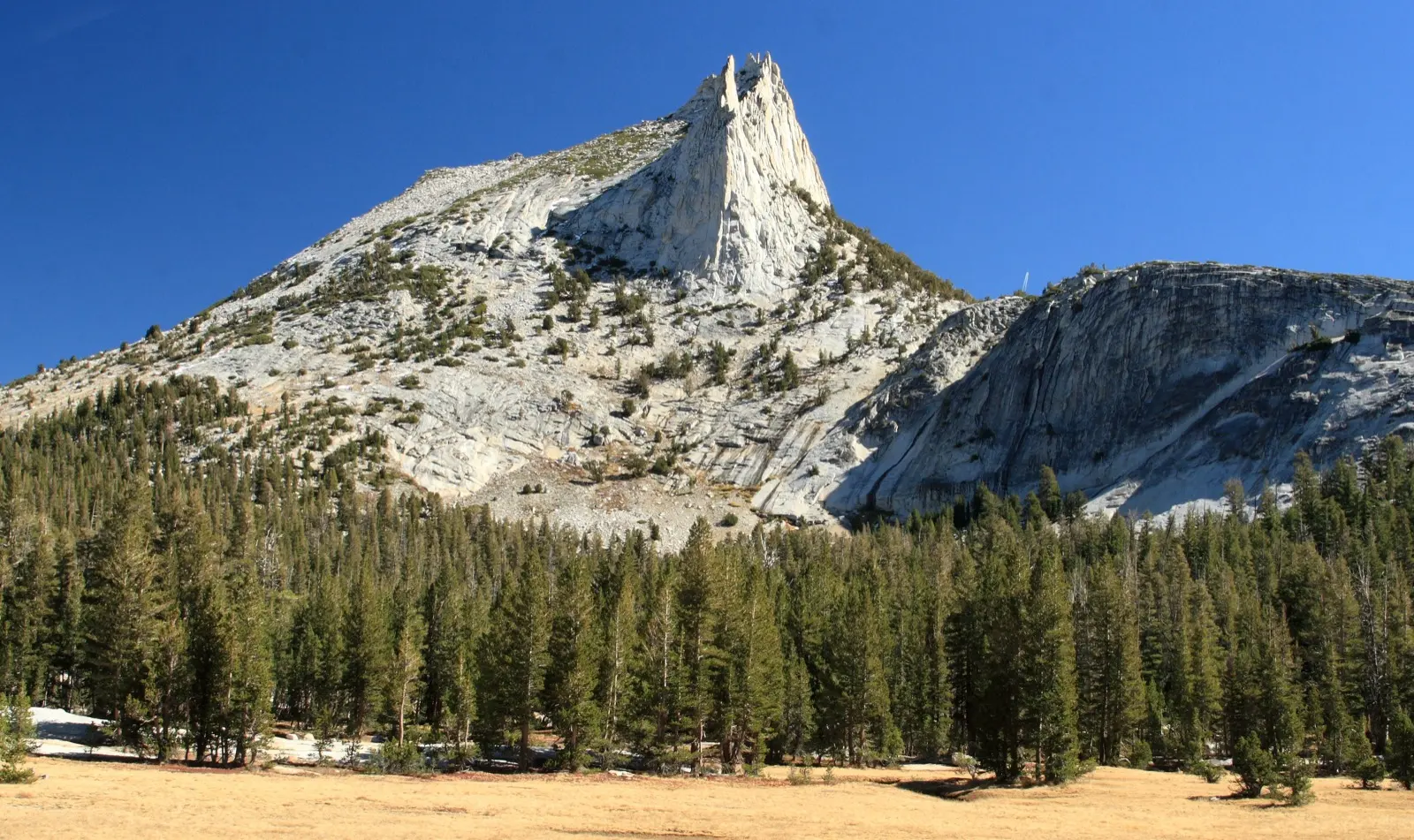
Hot and busy in the Valley, but the Tioga Road opens the cooler high country, about 10 °C colder.
- Valley highs
- 27–32 °C (81–89 °F)
- Rain and snow
- 4–12 mm a month
- High roads
- Open in most years
- Best for
- Tuolumne Meadows and alpine lakes

Autumn
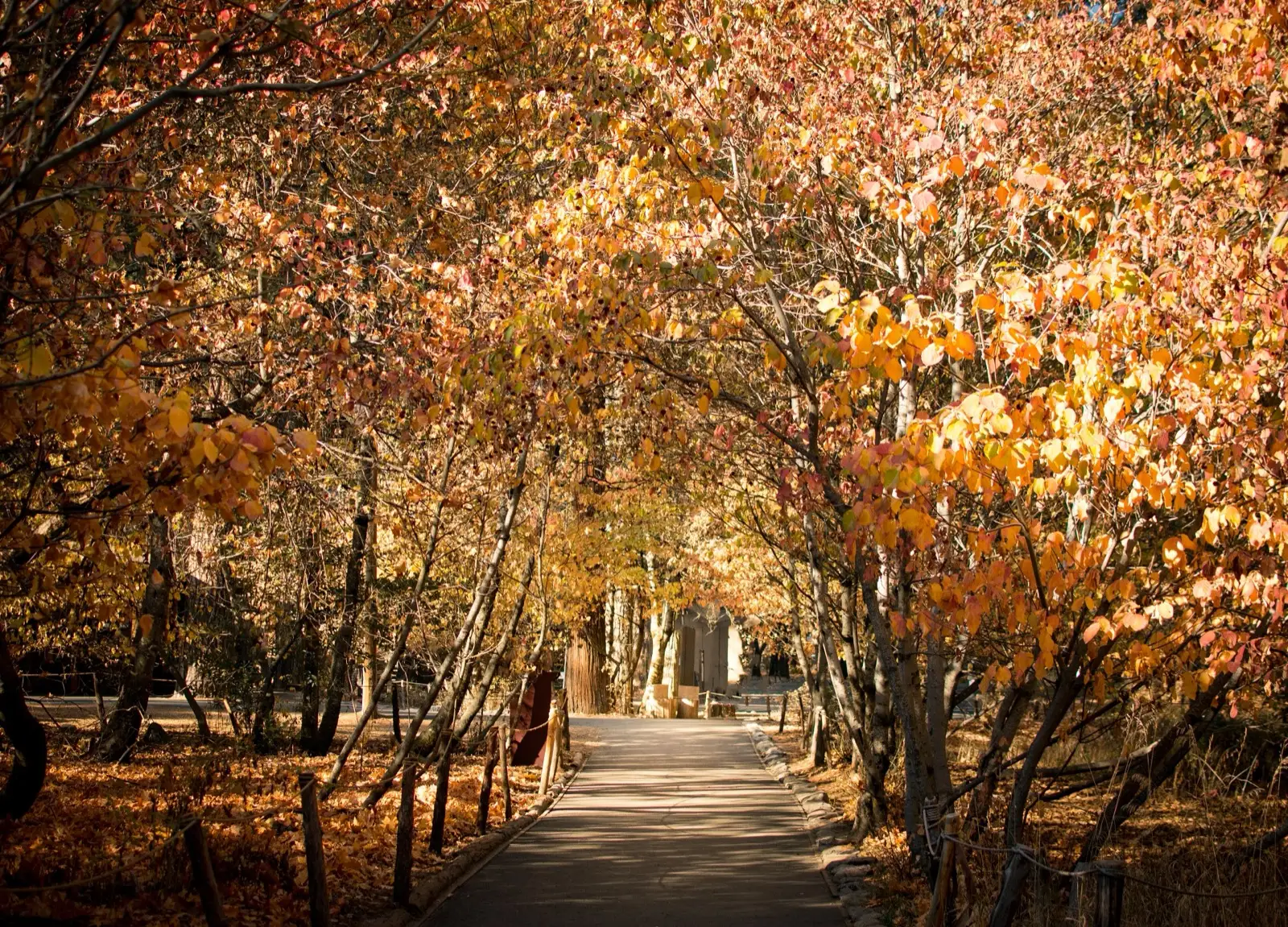
Dry, warm days and thinning crowds. Fall colour peaks around mid-October; the waterfalls are at their lowest.
- Valley highs
- 28 °C in September → 13 °C in November
- Rain and snow
- 10 mm in September → 103 mm in November
- High roads
- Open until the first big snow, usually in November
- Best for
- Hiking from September to mid-October

Winter
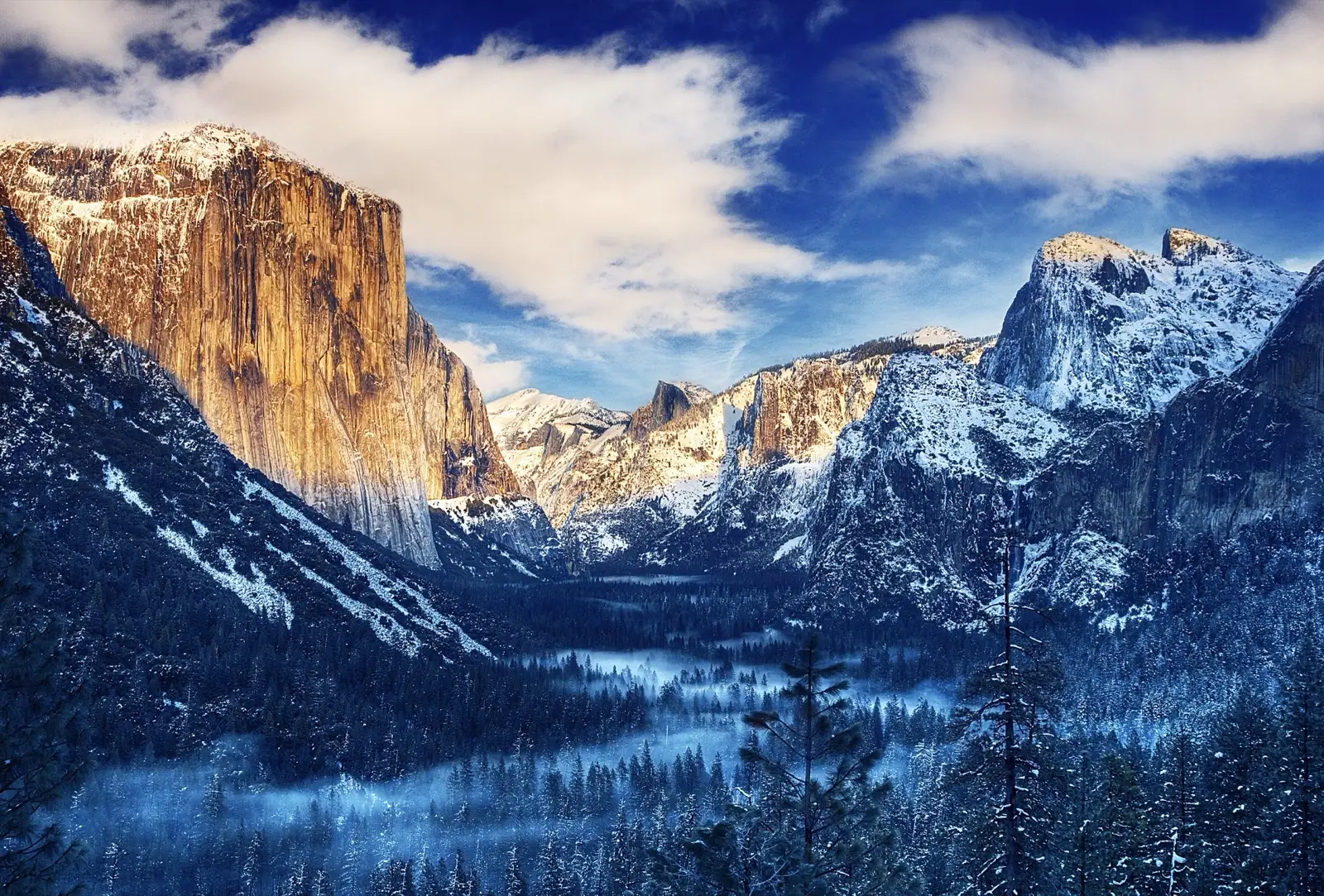
Quiet, frosty and often white. Nights fall below freezing, and the Valley can see rain or snow from the same storm.
- Valley highs
- 8–14 °C (46–57 °F)
- Rain and snow
- 139–177 mm a month
- High roads
- Tioga, Glacier Point and Mariposa Grove roads closed
- Best for
- Snow, skiing, ice skating, the Firefall
Elevation changes everything. Yosemite Valley sits at about 1,220 m (4,000 ft). Tuolumne Meadows, in the high country, is at 2,622 m (8,600 ft) and is typically 5–10 °C (roughly 10–20 °F) colder. Always check which part of the park your plans are in.
The short answer
Pick what you want from the trip and the months light up.
Waterfalls
Mid-May to early June
Snowmelt peaks, and the falls are usually at their best in mid-to-late May.
Valley hiking
May, and September to mid-October
Highs of 21–28 °C (71–83 °F) and very little rain.
High country
July to September
The Tioga Road is open, trails are snow-free, and wildflowers bloom from July.
Half Dome
Late May to mid-October
The only window when the cables are up. You also need a permit from the lottery.
Snow and skiing
Late December to February
Badger Pass skiing, the outdoor ice rink, snowshoeing and a quiet, snowy Valley.
Firefall
Second half of February
On a clear evening, the setting sun can light up Horsetail Fall on El Capitan.
Fewer people
October–November weekdays, and winter
The summer crowds are gone.
If you can only pick one window for an active trip, choose late May to early June for waterfalls, or September for the best all-round hiking weather with the whole park still open.
Yosemite weather by month
The chart shows the National Park Service's 1991–2020 averages. Switch between Yosemite Valley, where most visitors stay, and Tuolumne Meadows in the high country, the start of hikes like Cathedral Lakes, Lembert Dome and Elizabeth Lake. "Rain and snow" means rain plus melted snow, so in winter much of it falls as snow, especially higher up.
Show the numbers
| Month | Avg. high | Avg. low | Rain and snow |
|---|---|---|---|
| January | 9 °C (48 °F) | -2 °C (29 °F) | 177 mm (7.0 in) |
| February | 11 °C (51 °F) | -1 °C (30 °F) | 165 mm (6.5 in) |
| March | 14 °C (57 °F) | 1 °C (34 °F) | 139 mm (5.5 in) |
| April | 17 °C (63 °F) | 3 °C (38 °F) | 81 mm (3.2 in) |
| May | 21 °C (71 °F) | 7 °C (45 °F) | 49 mm (1.9 in) |
| June | 27 °C (81 °F) | 11 °C (51 °F) | 12 mm (0.5 in) |
| July | 32 °C (89 °F) | 14 °C (57 °F) | 7 mm (0.3 in) |
| August | 32 °C (89 °F) | 14 °C (57 °F) | 4 mm (0.2 in) |
| September | 28 °C (83 °F) | 11 °C (51 °F) | 10 mm (0.4 in) |
| October | 22 °C (71 °F) | 5 °C (41 °F) | 40 mm (1.6 in) |
| November | 13 °C (56 °F) | 0 °C (33 °F) | 103 mm (4.1 in) |
| December | 8 °C (46 °F) | -2 °C (28 °F) | 142 mm (5.6 in) |
| Year | 929 mm (36.8 in) |
| Month | Avg. high | Avg. low | Rain and snow |
|---|---|---|---|
| January | 5 °C (41 °F) | -11 °C (13 °F) | 157 mm (6.2 in) |
| February | 4 °C (39 °F) | -11 °C (12 °F) | 101 mm (4.0 in) |
| March | 6 °C (42 °F) | -10 °C (15 °F) | 107 mm (4.2 in) |
| April | 7 °C (45 °F) | -6 °C (22 °F) | 52 mm (2.0 in) |
| May | 12 °C (54 °F) | -3 °C (27 °F) | 43 mm (1.7 in) |
| June | 18 °C (65 °F) | 0 °C (33 °F) | 16 mm (0.6 in) |
| July | 22 °C (72 °F) | 4 °C (39 °F) | 14 mm (0.5 in) |
| August | 21 °C (70 °F) | 3 °C (37 °F) | 13 mm (0.5 in) |
| September | 18 °C (65 °F) | 0 °C (32 °F) | 13 mm (0.5 in) |
| October | 14 °C (57 °F) | -3 °C (26 °F) | 46 mm (1.8 in) |
| November | 8 °C (47 °F) | -7 °C (20 °F) | 79 mm (3.1 in) |
| December | 4 °C (40 °F) | -11 °C (12 °F) | 117 mm (4.6 in) |
| Year | 758 mm (29.7 in) |
National Park Service, 1991–2020 averages. "Rain and snow" is rain plus melted snow.
What the numbers tell you:
- Wet season: about 95% of Yosemite's precipitation falls between October and May, and more than 75% between November and March. January is the wettest month.
- Dry season: June to September is almost rain-free. Summer brings less than 5% of the yearly total, mostly as short afternoon thunderstorms.
- Heat: July and August average 32 °C (89 °F) in the Valley, and the hottest days can reach about 38 °C (100 °F).
- Freezing nights: from December to February, average lows are below zero, and November and March nights hover around freezing.
- Big day-to-night swings: the Valley often cools by 10–18 °C (18–32 °F) overnight, so pack layers in every season.
- The high country is colder: at Tuolumne Meadows, average lows are at or below freezing in every month except July and August. Even on a perfect summer hiking day, bring a warm layer and a hat.

When are Yosemite's roads closed?
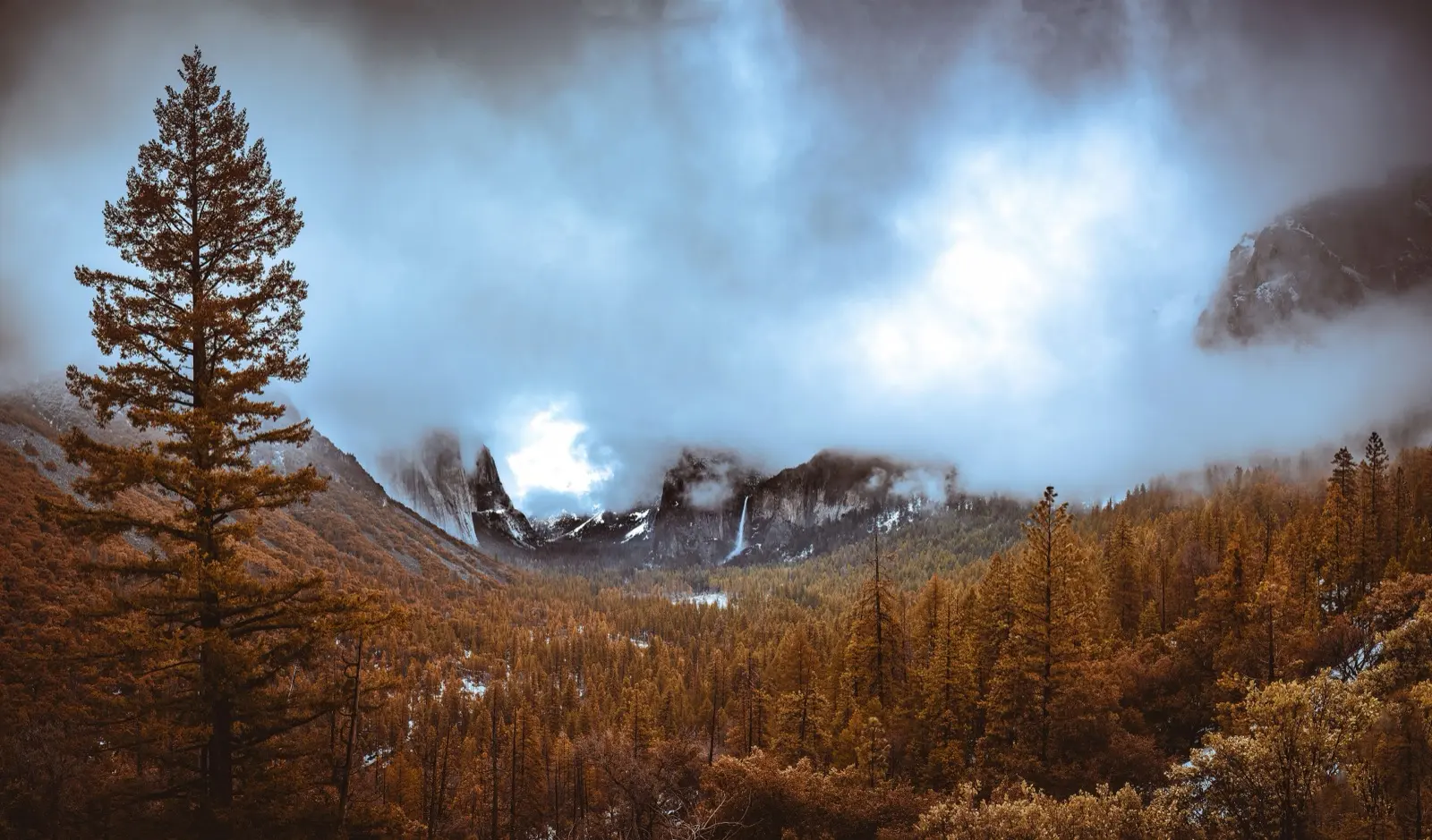
Several of Yosemite's most scenic roads close every winter. The park itself stays open, and Yosemite Valley and Wawona can be reached by car all year, but the high-elevation roads are buried under snow and at risk of avalanches.
When the roads are usually closed
October to September, so each winter closure reads as one bar. Tap a road for details.
Tioga Road (Hwy 120 East)
- Usually closes
- Sometime in November
- Usually reopens
- Late May or June
No car access to Tuolumne Meadows, Tenaya Lake or Olmsted Point, and no entry to the park from the east.
Glacier Point Road
- Usually closes
- Sometime in November
- Usually reopens
- Late May or June
You can't drive to Glacier Point or the Sentinel Dome and Taft Point trailheads. The first 8 km (5 mi) are plowed to Badger Pass while the ski area is open, about mid-December to early April.
Mariposa Grove Road (giant sequoias)
- Usually closes
- Around 30 November
- Usually reopens
- No earlier than 15 April, usually sometime in April
The grove stays open, but you walk in on the 3.2 km (2 mi) Washburn Trail with about 150 m (500 ft) of climbing, often on snow or ice.
Yosemite Valley, Wawona, Hwy 41, Hwy 140 and Hwy 120 West
- Usually closes
- Open all year
- Usually reopens
- n/a
Tire chains are often required in winter, and storms can cause short temporary closures.
How late can the high roads open? Plowing of the Tioga and Glacier Point roads normally starts around 15 April and takes one to two months, so the opening date depends entirely on the winter's snowpack.
When Tioga Road reopened
Plowing starts around 15 April; the opening date follows the snowpack.
- 2023: after a record-breaking winter, Tioga Road didn't open until late July, the latest opening since the road first opened in 1915.
- 2025: Tioga Road reopened on Memorial Day (26 May).
- 2026: Glacier Point Road opened on 9 May and Tioga Road on 15 May.
For winter 2026–27, both roads were already closed for the season by mid-November 2026. Because the opening date can swing by two months, it pays to keep an eye on your trip once the dates are set: save it in Halcyon and you'll get a notification when the forecast for those days changes, so a late storm doesn't catch you on the wrong side of the Sierra.
Autumn heads-up: services along the Tioga Road (food, fuel and so on) end after September, and overnight parking along the road isn't allowed after 14 October, even if the road itself is still open.
Winter driving: when chain controls are in effect, you must carry chains and know how to fit them, whatever vehicle you drive. If you're coming from the east side of the Sierra (Mammoth Lakes, Death Valley or Las Vegas), the Tioga Pass shortcut doesn't exist in winter, and the drive around adds several hours.
Spring (April–May): waterfall season
Spring is when Yosemite is at its loudest. As the snowpack melts, the waterfalls swell, and dozens of small, unnamed cascades appear along the Valley rim. The big falls usually peak in mid-to-late May, and Yosemite Falls, Bridalveil Fall and Ribbon Fall all reach peak flow in May. Redbud and dogwood bloom in the Valley in May too.
Weather for hiking: days are pleasant, around 21 °C (69 °F) in the Valley, with cold nights around 4 °C (39 °F). April is still showery, and a late winter storm is always possible, so chains may still be needed.
Trail conditions: some low-elevation hikes from the Valley, Wawona and Hetch Hetchy are snow-free by April, and most are clear by May. Higher up, most of the park stays snowy through May and into June, so backpacking options are very limited.
Best spring hikes:
- Mist Trail to Vernal and Nevada Falls. The classic: 8.7 km (5.4 mi) round trip with about 610 m (2,000 ft) of climbing to the top of Nevada Fall. In spring you'll get soaked by the spray, so bring a rain jacket and shoes with good grip.
- Lower Yosemite Fall loop. Short and flat, and you can feel the roar of North America's tallest waterfall.
- Mirror Lake. Visit in spring: it's dry in summer and autumn.
Downsides: the Tioga and Glacier Point roads are usually still closed through April and much of May. Crowds also build quickly from Memorial Day weekend onward.
Summer (June–August): high-country season
Summer is peak season. It's warm, dry and very busy. In the Valley, July and August average 32 °C (89 °F). That's fine for an early-morning hike but hard work on an exposed switchback trail at 2 pm.
The real reward of summer is the high country. Once the Tioga Road opens, you can reach Tuolumne Meadows, Tenaya Lake and dozens of trailheads where the air is about 10 °C cooler than in the Valley. Higher trails can stay snowy into June or even July, but by July through September they're usually in great shape. Look for subalpine wildflowers around Tuolumne from about July.
Things to plan around:
- Afternoon thunderstorms build over the high country. Start early, and get off exposed domes and summits by early afternoon.
- Wildfire smoke: one to three weeks of unhealthy air are common in August and September. Check air quality before you commit to a long hike.
- Fading waterfalls: they stay high well into June, but by August Yosemite Falls is often just a trickle or completely dry. Vernal, Nevada and Bridalveil Falls flow all year, but they're thin by late summer.
- Crowds: arrive before mid-morning, especially at weekends. For traffic updates on busy days, text "ynptraffic" to 333111.
Half Dome: the cables usually go up on the Friday before Memorial Day and come down the day after the second Monday in October. You need a permit (by lottery), and only 300 hikers a day are allowed beyond the subdome. The round trip is 22–26 km (14–16 mi) with about 1,460 m (4,800 ft) of climbing, so this is a summer and early-autumn objective.
Summer strategy: hike in the Valley at dawn, then drive up to the high country for the afternoon.
Autumn (September–November): the hiker's sweet spot
If your trip is all about hiking, September and the first half of October are hard to beat. The Valley averages 28 °C (83 °F) in September and 22 °C (71 °F) in October, there's almost no rain, the Tioga Road is still open, and the summer crowds thin out.
- Fall colour: Yosemite is mostly evergreen, so the colour is modest but lovely. Big-leaf maples, black oaks and dogwoods are at their showiest around mid-October.
- Waterfalls: this is the trade-off. Yosemite Falls has little or no water in autumn, and the year-round falls slow to a trickle.
- Smoke: early September can still be smoky, and the park sometimes runs prescribed burns in autumn.
- November is a transition month. Rain returns (103 mm on average), the first real snow usually closes the Tioga and Glacier Point roads, and nights drop to freezing. On the plus side, the park is quiet and the Curry Village ice rink opens.
Winter (December–March): cozy snow time
Winter Yosemite is a different place: quiet, frosty and often dusted with snow. Most of the park is snow-covered from about November through May. The Valley floor itself may or may not be white on any given day, because a winter storm there can bring rain or snow. Expect daytime highs around 8–11 °C (46–51 °F) and nights below freezing.
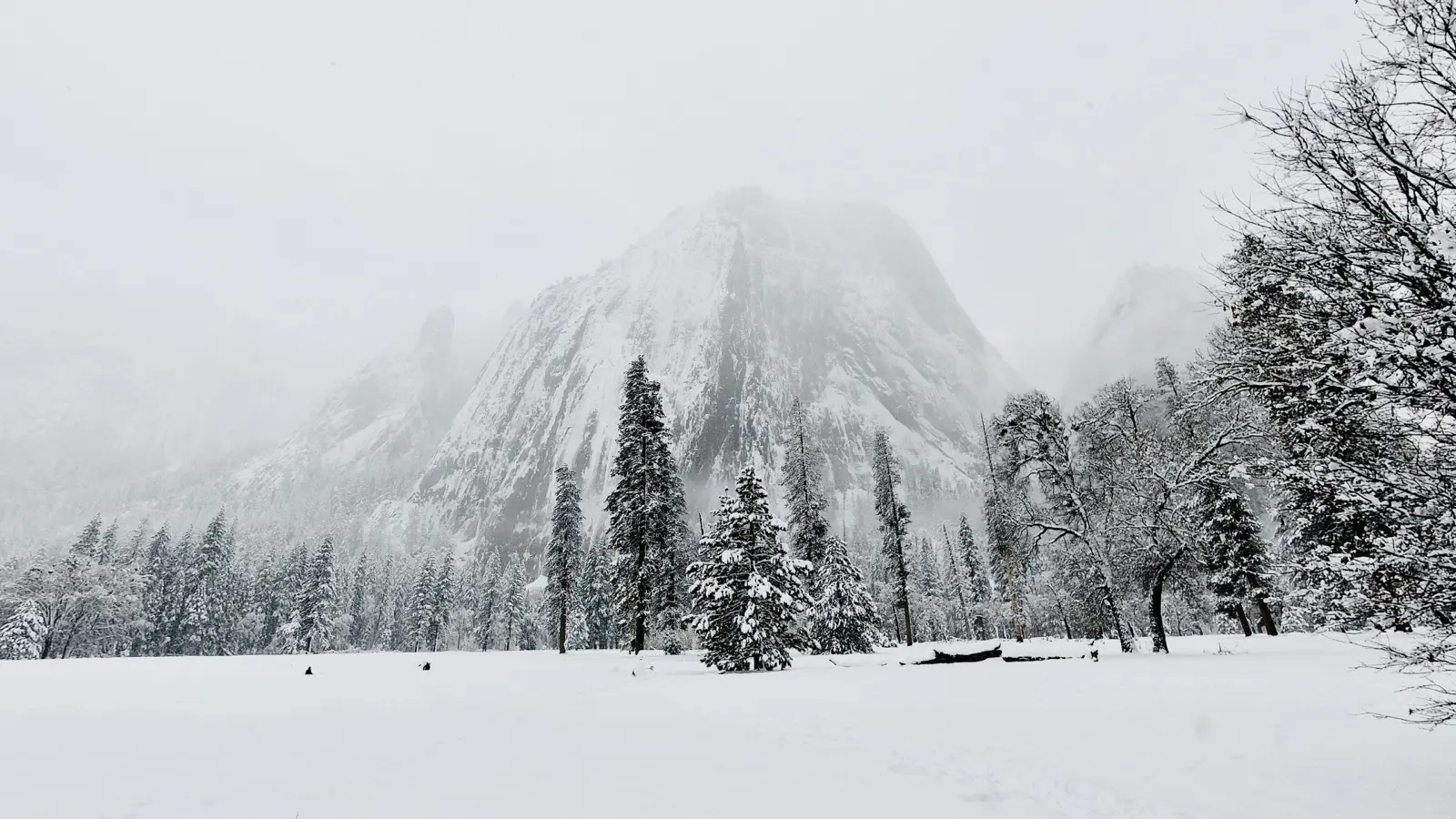

Cozy winter things to do:
- Skiing and snowboarding at Badger Pass (also called the Yosemite Ski & Snowboard Area). California's oldest ski area opened in 1935. It's small, affordable and great for families, with 10 runs and 5 lifts from a base of about 2,195 m (7,200 ft). There's also a snow-tubing hill, and nearly 160 km (100 mi) of cross-country ski and snowshoe trails start here. Free shuttles run up from the Valley.
- Ice skating at Curry Village. This outdoor rink has been a Yosemite tradition since 1928. You skate with Half Dome and Glacier Point overhead, then warm up at the fire pit. It's open from about mid-November to early March, and the 2026–27 season opened on 13 November.
- Snowshoeing and snow play. Sledding isn't allowed at Badger Pass, but there are snow play areas at Crane Flat and just outside the South Entrance. You can also snowshoe or ski the Washburn Trail into the Mariposa Grove and see giant sequoias in the snow.
- Winter walks in the Valley. In cold years, look for the ice cone that builds at the base of Upper Yosemite Fall.
- The Firefall (second half of February). For a few evenings, the setting sun can make Horsetail Fall on El Capitan glow orange like lava. It lasts only 5 to 15 minutes, and it needs both water in the fall and a clear sky. The viewing area near El Capitan Picnic Area is a 2.4 km (1.5 mi) walk each way from the Yosemite Falls parking. In 2026 the park projected the best viewing window as 10–26 February.
- Cozy places to stay: heated tent cabins at Curry Village, Yosemite Valley Lodge, or the historic Ahwahnee.
Be realistic about snow: Badger Pass runs on natural snow only. It's normally open from mid-December to mid-March, but the 2024–25 season never opened at all. The 2025–26 season didn't start until 16 January and lasted only about 60 days, closing on 18 March. For the most reliable snow, aim for mid-January to February and keep your plans flexible.
Winter trail closures: ice makes some famous trails dangerous, so parts of them close for the season:
- The Mist Trail section from the John Muir Trail junction to the top of Vernal Fall.
- The John Muir Trail "ice cut" between Clark Point and Nevada Fall.
You can still reach the tops of both falls on a combined winter route. The Four Mile Trail to Glacier Point also closes above Union Point, about halfway up.
Month-by-month planner
Hiking conditions, month by month
The stronger the green, the better. Tap a month for weather, roads and highlights.
January
- Valley weather
- Cold, wettest month, snow possible. Average 9 °C (48 °F) by day, -2 °C (29 °F) at night, 177 mm (7.0 in) of rain and snow.
- Roads
- Tioga, Glacier Point and Mariposa Grove roads closed
- Valley hiking
- Fair (icy)
- High country
- No access
- Highlights
- Skiing, ice skating, snowy solitude
February
- Valley weather
- Cold and wet. Average 11 °C (51 °F) by day, -1 °C (30 °F) at night, 165 mm (6.5 in) of rain and snow.
- Roads
- Same winter closures
- Valley hiking
- Fair (icy)
- High country
- No access
- Highlights
- Firefall, skiing
March
- Valley weather
- Cool, still wet. Average 14 °C (57 °F) by day, 1 °C (34 °F) at night, 139 mm (5.5 in) of rain and snow.
- Roads
- Same; Badger Pass winds down
- Valley hiking
- Fair to good
- High country
- No access
- Highlights
- Late-season snow, waterfalls waking up
April
- Valley weather
- Mild, showers. Average 17 °C (63 °F) by day, 3 °C (38 °F) at night, 81 mm (3.2 in) of rain and snow.
- Roads
- Mariposa Grove reopens; Tioga plowing starts
- Valley hiking
- Good
- High country
- No access
- Highlights
- Low-elevation hikes, rising waterfalls
May
- Valley weather
- Warm, mostly dry. Average 21 °C (71 °F) by day, 7 °C (45 °F) at night, 49 mm (1.9 in) of rain and snow.
- Roads
- Glacier Point and Tioga often open late May (sometimes June)
- Valley hiking
- Great
- High country
- Snowy
- Highlights
- Peak waterfalls, dogwood bloom, Half Dome cables up
June
- Valley weather
- Warm to hot, dry. Average 27 °C (81 °F) by day, 11 °C (51 °F) at night, 12 mm (0.5 in) of rain and snow.
- Roads
- All open in most years
- Valley hiking
- Great
- High country
- Opening up
- Highlights
- Waterfalls still strong, long days
July
- Valley weather
- Hot, driest. Average 32 °C (89 °F) by day, 14 °C (57 °F) at night, 7 mm (0.3 in) of rain and snow.
- Roads
- All open
- Valley hiking
- Good early, hot midday
- High country
- Great
- Highlights
- Tuolumne wildflowers, alpine lakes
August
- Valley weather
- Hot, smoke risk. Average 32 °C (89 °F) by day, 14 °C (57 °F) at night, 4 mm (0.2 in) of rain and snow.
- Roads
- All open
- Valley hiking
- Fair (heat, smoke)
- High country
- Great
- Highlights
- High-country hiking, warm lake swims
September
- Valley weather
- Warm, dry, pleasant. Average 28 °C (83 °F) by day, 11 °C (51 °F) at night, 10 mm (0.4 in) of rain and snow.
- Roads
- All open (Tioga services end)
- Valley hiking
- Great
- High country
- Great
- Highlights
- Best all-round hiking month
October
- Valley weather
- Mild days, chilly nights. Average 22 °C (71 °F) by day, 5 °C (41 °F) at night, 40 mm (1.6 in) of rain and snow.
- Roads
- Tioga usually open until the first big snow
- Valley hiking
- Great
- High country
- Good (cold nights)
- Highlights
- Fall colour mid-month, quieter trails
November
- Valley weather
- Cool and wet, first snow. Average 13 °C (56 °F) by day, 0 °C (33 °F) at night, 103 mm (4.1 in) of rain and snow.
- Roads
- Tioga and Glacier Point close; Mariposa Grove around 30 November
- Valley hiking
- Good to fair
- High country
- Closing
- Highlights
- Ice rink opens, very few people
December
- Valley weather
- Cold and wet. Average 8 °C (46 °F) by day, -2 °C (28 °F) at night, 142 mm (5.6 in) of rain and snow.
- Roads
- Winter closures; the road to Badger Pass opens with the ski area
- Valley hiking
- Fair (icy)
- High country
- No access
- Highlights
- Holiday coziness, skiing if there's snow
Before you go
- Reservations: in 2026, Yosemite dropped its timed-entry reservation system, so no reservation was needed to drive in. Entrance fees still apply. The rules have changed almost every year since 2020, so check the NPS "Entrance Reservations" page for the year you're travelling.
- Check conditions the morning you go. Roads and trails close temporarily for storms, rockfall, fire and trail work. The NPS "Current Conditions" page is updated regularly, and the park's 24-hour road and weather line is +1 209-372-0200.
- Carry tire chains from roughly November to April, even in a rental car.
- Dress in layers. Day-to-night temperature swings of 10–18 °C are normal in the Valley, and the high country can freeze even in summer.
- Start early in summer to beat the heat, the crowds, the parking chaos and the afternoon thunderstorms.
Quick answers
What is the best month to visit Yosemite?
September is the best all-round month: warm, dry days, the whole park open and thinner crowds. For waterfalls, go from mid-May to early June instead.
When are Yosemite's waterfalls at their best?
The big falls usually peak in mid-to-late May, as the snowpack melts. By August, Yosemite Falls is often a trickle or dry.
When is Tioga Road open?
Usually from late May or June until sometime in November. Plowing starts around 15 April, and the opening date depends on the winter's snowpack: it was late July in 2023 and 15 May in 2026.
Does it snow in Yosemite Valley?
Yes, but not reliably. Winter storms in the Valley can bring rain or snow, and nights are below freezing from December to February. For the most dependable snow, aim for mid-January to February.
When can you see the Yosemite Firefall?
In the second half of February, for a few minutes at sunset, if Horsetail Fall has water and the sky is clear.
Sources
- National Park Service, Weather (average temperatures and precipitation, 1991–2020)
- National Park Service, Winter road closures
- National Park Service, Tioga and Glacier Point roads plowing and opening updates
- National Park Service, seasonal guides: Spring, Summer, Fall, Winter
- National Park Service, Waterfalls
- National Park Service, Half Dome permits
- National Park Service, Vernal and Nevada Fall winter route
- National Park Service, Horsetail Fall
- National Park Service, Winter activities and Badger Pass Ski Area
- National Park Service, Entrance reservations
- KQED, Tioga Road's historically late 2023 opening
- POWDER Magazine via AOL, Badger Pass 2025–26 season recap
- National Parks Traveler, Badger Pass won't open in winter 2024–25
Photos are from Wikimedia Commons under Creative Commons licences; each caption credits its photographer and licence. Climate averages are long-term norms, not forecasts. Yosemite's weather can change fast at any time of year, so check the forecast and current conditions right before your trip.